


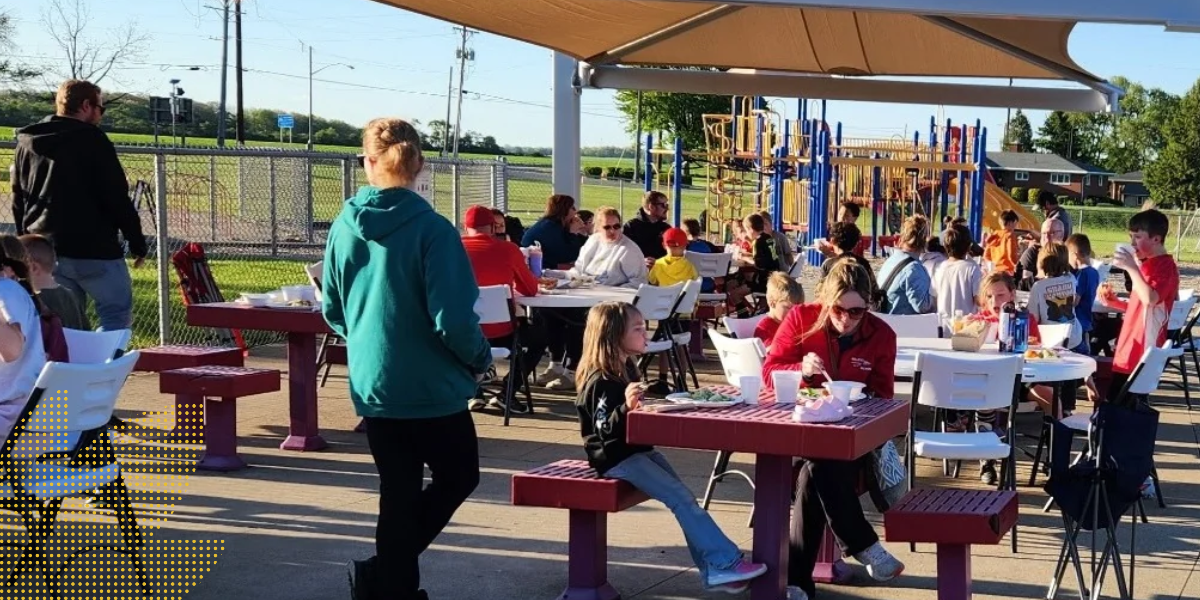
Thursday evenings during soccer season can be hectic. Between practices, games, and getting everyone where they need to be, finding time to sit down for dinner can be a challenge for families. But at First Church Bellevue in Bellevue, Ohio, Thursday evenings have become an opportunity for something more. Each week, more than 80 soccer players and family members gather for the Soccer Club Community Dinner (SCCD), where a shared meal is creating space for friendships, meaningful conversations, and opportunities to explore faith. And it all began with a 10-week experiment. From Prayer to Practice In August 2025, after spending time in prayer about how to be more intentional with discipleship and evangelism in their community, Brad Andres, Outreach Pastor at First Church Bellevue and his team decided to try something. They had been talking about what it means to live out their faith beyond Sunday mornings. Now they wanted to put those conversations into practice, trusting that God was already at work among the people around them. At the heart of their experiment was a simple conviction: God desires to be reunited with his sons and daughters. What might happen if the church became more intentional about building relationships and creating opportunities for people to encounter Jesus? They began with a 10-week experiment in mission, offering weekly dinners to families involved in a local soccer club. The idea was both practical and relational. Soccer families were already gathering for practices and games, often during the dinner hour. Providing a meal would meet a real need while giving church members an opportunity to get to know families they might otherwise never meet. When the soccer season returned in April 2026, so did the Soccer Club Community Dinner. An Invitation, Not an Expectation Church members contribute in all kinds of ways. Some prepare an entire meal with their small group or ministry team. Others bring a dish, help set up, clean up, or simply come ready to sit at a table and get to know someone. But the goal has never been just to feed people. It's to build relationships. Specifically, to turn strangers into friends, and friends into family. At the end of each meal, families are invited to stay for a Jesus story and discussion. The invitation is intentional, but so is the freedom to decline. "Thanks for joining us tonight for this meal to celebrate goodness in our community! We've got go boxes packed and ready, and if you need to take off, we bless you on your way. Otherwise, if you want to stick around, we will be sharing and discussing a story about Jesus in about five minutes." There's no pressure to stay. Families who need to get home can take their leftovers and head out. Those who are curious are welcome to remain and explore a story about Jesus together. When Relationships Open the Door When SCCD began its third season in August 2026, approximately 30% of the participating families were not connected to a church. And something encouraging began to happen. A handful of new faces chose to stay for the Jesus story and discussion, including families who had been around the soccer community for more than a year but had never participated in the faith conversations before. After months of shared meals, familiar faces, and conversations around the table, these families were choosing to explore faith. Faithfulness in the Experiment What began as a 10-week experiment has become an ongoing opportunity to practice hospitality, build relationships, and explore discipleship within an existing community. The Soccer Club Community Dinner is a reminder that mission doesn't always begin with creating something entirely new. Sometimes it begins with noticing the people already around us, paying attention to their needs, and being willing to try something. For this church, that meant stepping into the rhythms of a soccer community with a meal, an open invitation, and a conviction that God was already at work. And as families continue to gather on Thursday evenings, they're discovering what can happen when a church moves from talking about mission to practicing it, one shared meal and one relationship at a time.

From leftover food to dirt bikes to a recovery center, three communities are discovering what happens when they say yes to the opportunities right in front of them. We say it often at Fresh Expressions: The beginnings of something new are sometimes surprisingly ordinary. And at our recent Here for Good gathering in Bristol, Virginia , we heard three stories that brought this truth to life. Leftover food from a fundraiser. A dirt bike track in Southwest Virginia. A recovery center in Bristol. These weren't hypothetical ministry ideas or carefully constructed plans. They were stories of local leaders who recognized an opportunity, took a step of faith, and discovered God at work in unexpected ways. During a conversation moderated by Shannon Kiser, Director of Fresh Expressions, Jonathan Anderson of Engage Tri-Cities, Daniel McGlothlin of Church of Dirt, and Uriah Booher of The Table shared how their ministries began and what they've learned along the way. Their stories invite us to imagine what might be possible in our own communities. Engage Tri-Cities: Start With an Opportunity When Jonathan Anderson and his wife returned to Kingsport, Tennessee, in 2016, they believed God was leading them to plant a church. They began gathering with friends on Friday nights, sharing pizza and exploring what might come next. As they prepared, Jonathan volunteered with local nonprofits, wanting to understand the community rather than make assumptions about its needs. Then one Saturday night, a friend called with leftover food from a fundraiser. Did Jonathan know somewhere it could go? The next afternoon, about a dozen people gathered to serve meals to neighbors experiencing homelessness. Afterward, they returned home, sharing stories of conversations and relationships beginning to form. There was no plan to make it a recurring ministry. But the group wanted to do it again. What began as one afternoon became an every-other-week gathering, then a weekly ministry as more churches joined in. Today, through Engage Tri-Cities that commitment to relationships continues in Kingsport's Lynn Garden neighborhood. Rather than arriving with a predetermined plan, the team spent months listening to residents about what mattered to them. When neighbors identified safety as a concern, Engage Tri-Cities helped organize a neighborhood watch, creating space for residents to connect and have their voices heard. They've also worked to renovate neglected properties. And sometimes, the most meaningful moments happen when the work stops. Jonathan described neighbors dropping by during renovations, leading to conversations on overturned buckets about family struggles, loneliness, and prayer. He's learned that these moments aren't distractions. "That's not an interruption. That is an opportunity." What began with leftover food has become a way of seeing, listening to, and loving a community. Church of Dirt: Start With a Shared Passion In Abingdon, Virginia, Church of Dirt began with an entirely different idea. A man named Winston loved motorcycles and wanted to support a church in Costa Rica. He built a dirt bike track on his property, hoping to raise money by charging riders to practice there. The fundraiser worked, but local ordinances and concerns about noise made continuing the original plan difficult. Still, something was happening. Riders were gathering, sharing meals, building friendships, and hearing short Bible messages. Eventually, the gatherings developed into Monday evenings for adults and Tuesdays for youth. Daniel McGlothlin, one of Church of Dirt's founding members, remembers a winter gathering in Winston's garage that changed everything. Winston was preparing to share a Bible story and asked the children if anyone had ever heard of Noah. Not one hand went up. There were roughly 30 to 40 children present. In the heart of Southwest Virginia, a region many consider part of the Bible Belt, none appeared familiar with one of the Bible's most recognizable stories. "That's when we realized, hey, this is a real church," Daniel recalled. Many motocross families spend their weekends traveling to races. Traditional Sunday morning worship simply isn't part of their rhythm. But during the week, they're eager to gather at the track. So that's where Church of Dirt meets them. Children and adults come to ride, eat, build friendships, and hear about Jesus. Even the restriction limiting how many motorcycles can ride at once creates opportunities for relationships as riders wait their turn. What began as a fundraiser became a Christian community taking shape around a shared passion. Daniel's encouragement to other leaders is simple: "If God's given you a passion about something, if you just turn that passion over to God, he can build anything with it." The Table: Start With the People on Your Heart For Uriah Booher, associate pastor of The Table in Bristol, Virginia, the mission is deeply personal. Having spent more than 20 years struggling with addiction, Uriah knows what it feels like to experience homelessness and be overlooked. He remembers walking the streets of Bristol and feeling as though people avoided even making eye contact. He never wants someone else to feel that way. Today, The Table creates Christian community with people who have often been overlooked, particularly those experiencing addiction, homelessness, and other difficult circumstances. The ministry began with a vision to bring church into Bristol Lifestyle Recovery, a local recovery center. As people began coming to faith, leaders recognized the need for ongoing discipleship beyond the initial recovery experience. That led to Mark 117, a yearlong residential discipleship program where men grow in faith, learn to live on mission, and participate in the ministry of The Table. And that ministry doesn't require a traditional church building. On Sunday mornings, they gather at Bristol Lifestyle Recovery, sometimes setting up chairs in the parking lot. On Sunday evenings, they meet at the Boys and Girls Club, serving approximately 100 to 150 meals. But the meals are only part of the story. The men involved in Mark 117 get to know guests, listen to their struggles, and follow up on conversations the next week. Ministry might also look like playing bingo at the Salvation Army, offering free haircuts in a park, or opening a gym so neighborhood children can play basketball. The common thread isn't a particular program. It's a commitment to helping people know they are seen, loved, and valued. "Jesus never looked over anybody, and we don't want to look over anybody," Uriah shared. The Table also invites local churches to participate. While donated meals and supplies are appreciated, Uriah encourages churches to offer something even more important: their presence. Come share a meal. Sit with someone. Listen to their story. Build a friendship. It's not simply about what the church can do for people, but what it can do with them. What Might God Do With What You Already Have? One of the most meaningful parts of the conversation at Here for Good wasn't simply hearing about three creative expressions of church. It was recognizing what these seemingly different ministries had in common. As the leaders shared, Shannon Kiser offered this observation: "Each of these started not with something you wish you had, but what you actually had." Jonathan had a small group of friends, leftover food, and a concern for his neighbors. Daniel and his friends had a field, a garage, and a shared love of motorcycles. Uriah had his own lived experience and a desire to help others know they were loved. None knew exactly where those beginnings would lead. But each took a step, paid attention to what was happening, and responded to the opportunities that followed. These stories aren't meant to suggest that every church should start serving meals, build a dirt bike track, or launch a recovery ministry. Instead, they offer a glimpse of what becomes possible when disciples carry their faith, passions, relationships, and experiences into the communities around them. Near the end of the conversation, someone in the audience asked how to recognize God's nudge and find the courage to respond. The three leaders offered remarkably similar encouragement: Take the first step. As Jonathan reminded the room, "You don't have to start with that 10-year plan, just that next yes." It was the kind of conversation that made Here for Good so meaningful. Leaders from different communities, with different experiences and approaches to ministry, learning from one another and discovering fresh possibilities for their own contexts. And perhaps that's the invitation for the rest of us, too. God has already placed people, passions, experiences, and opportunities in our lives and congregations. We may not know exactly where they'll lead, but we can begin by offering what we have and taking the next faithful step. Sometimes that's where something new begins.
What changes when we begin to see the image of God—and the gifts of God—in every person? Sue Bessette’s story is one of transformation. She openly shares that there was a time when she avoided people with disabilities. But God began changing her heart, eventually leading her into more than two decades of disability ministry and a habit of seeking out people with disabilities wherever she went. That’s how Sue met the young woman who invited her to Miracles of God, a Fresh Expression of church where people with special needs, families, caregivers, and friends participate, contribute, worship, and belong together. In this conversation, Sue shares what God has taught her—and continues to teach her—about belonging, giftedness, and recognizing His image in everyone. Listen to Sue’s story and discover what the community of Miracles of God has taught her. Sue Bessette was born in Manhattan and raised in Northern New Jersey. A mother of three daughters, grandmother of four granddaughters, and great-grandmother, Sue’s journey of faith began later in life. After 17 years of her daughters praying for her, Sue came to faith in Christ at age 59. For more than two decades, Sue served with Joni & Friends Disability Ministry , both locally and through national and international ministry, developing a deep passion for people with disabilities and their families. At age 79, an invitation to Miracles of God Church opened the door to a new chapter in her journey—one that would bring together her love for people, her experience in disability ministry, and a growing relationship with God. This season, we’re diving into the streams of Fresh Expressions — from senior adults and recovery ministry, to arts, outdoors, recreation, and more. Each month, you’ll hear directly from practitioners who are navigating these fresh ways of being church in the world. Their stories will spark your imagination and encourage you to see where God is already at work in your community and how you might join in! So whether you’re a pastor, lay leader, or simply curious about how church can thrive beyond the walls, join us for Season seven of the Fresh Expressions Podcast. Related Resources:
What is giving rural church leaders hope right now? In this episode of the Rural Renewal Podcast, Chris and Kathleen sit down with Andy Barnes for a conversation about what he is seeing and hearing across rural churches and communities. Together, they explore the stories we sometimes miss when challenges become the dominant narrative and the creative, faithful ways rural churches are loving their neighbors, serving their communities, and joining in with what God is already doing. Andy also offers encouragement for pastors who are tired or wondering whether their faithful presence is really making a difference, and shares what gives him hope as he looks toward the future of the rural church. This conversation offers a glimpse into the heart behind Here for Good : paying attention to what God is already doing right where we are and discovering how we might join in. Andy Barnes is a former basketball coach having coached at the high school and college levels. After coaching he pastored for over 25 years and is now a regional field strategist for the BGAV in SW VA. He has been married to his wife Marsha for 42 years. They have 4 grown children and 6 grands. Chris and Kathleen Blackey , are hosts of the Rural Renewal Podcast. Since 2010, together they have served as co-pastors at the First Baptist Church of South Londonderry, Vermont. The Blackeys live in South Londonderry, Vermont with their children – Sarah, Daniel, and Priscilla, as well as their cat, dog, and chickens. Related Resources: Are you a Rural Leader? Join us October 8th & 9th, 2026 for Here for Good in Bristol, VA. Join our Facebook group: Rural Renewal Podcast Community Email us: podcasts@freshexpressions.com Subscribe & Review Help us get the word out by subscribing and leaving a review for Rural Renewal Podcast on your favorite platform. Apple Podcasts Spotify Google Podcasts
A few years ago, we sat down with Jeremy Veninga to hear a story that was already surprising. Jeremy had entered the Dinner Church School of Leadership unsure whether he was capable of starting something like a Dinner Church. He didn’t come from a traditional pastoral or theological background. But he knew enough to know he wanted to learn—and, as he put it at the time, he needed to “go head first.” By the time we recorded our conversation with him, that step of faith had grown into three Dinner Churches reaching more than 200 people each week. Recently, we wondered: What happened next? So we went back to Jeremy. Four Years, Four Dinner Churches Today, Jeremy and his team have four Dinner Church locations. Their first is approaching its fourth anniversary, while their newest location is already celebrating its first year. Together, they are now sharing a meal with nearly 300 people every week. But perhaps the most telling part of Jeremy’s update isn’t the number of locations or even the number of people around the tables. “Our teams are going strong and are still feeling excited and energized about the mission,” he shared. Four years in, some things have also gotten easier. In the beginning, Jeremy remembers how much attention went toward simply figuring out how to make Dinner Church happen. There were logistics to learn, rhythms to establish, and plenty of details that seemed important. Now, those rhythms come much more naturally. “We are able to focus on the people more than the process,” Jeremy said. “At first I think the logistics felt so front and center because we were learning.” Time has also given the team some perspective. “People don't notice the things that you notice,” Jeremy reflected, “and the things we thought were big in the beginning we don't even notice anymore.” With less energy going toward getting every detail right, there is more room to notice what has always mattered most: the people around the tables. Watching Discipleship Happen Over Time In our original conversation, Jeremy offered a simple picture of discipleship at Dinner Church: being present, participating, and pondering. Years later, he has had the opportunity to watch people move through those layers. One of them is Zach. Jeremy watched as Zach moved from experiencing homelessness to having a place of his own. But he also watched something else unfold. Zach didn’t simply attend Dinner Church. He began to make himself part of it. He lent a hand. He leaned into the Jesus story. He shared with others. His story gave Jeremy and the team a chance to see what can happen when someone has a table to keep returning to—and a community in which faith has room to grow over time. From Leading Everything to Raising Up Leaders Jeremy’s own role has changed, too. In the original podcast, he described a transition from being the “key decision maker” to becoming the “chief noticer, encourager, equipper, and supporter.” That transition has continued. Jeremy and Cindy now serve in more of an oversight role, while key leaders at each Dinner Church carry the ministry in their individual locations. “We have seen our people really step up and step into their individual calling,” Jeremy said. “It has been very awesome to see.” Jeremy and Cindy still spend time at each location, supporting leaders and their teams. But raising up others has freed them to begin asking where they might be called next—what Jeremy describes as their next “Macedonian call.” And underneath that multiplication is something Jeremy was given before the first Dinner Church ever began: permission. His pastor and host church were willing to encourage the idea, pray for it, resource it, and give Jeremy room to try. That support hasn’t disappeared as Dinner Church has grown. “We are blessed with a pastor that still fully supports not only the current state but the future of what we are doing,” Jeremy said. Their church is believing for 1,000 people being reached inside the church—and another 1,000 outside it. Jeremy’s encouragement to other pastors who see someone in their congregation carrying a similar vision is simple: start with encouragement and prayer. Then, if possible, back that encouragement with financial support. “This has been so much easier knowing we didn't have to focus on funds and could focus on the vision and, more importantly, the people we are reaching.” Returning to What He Learned When Jeremy first entered the Dinner Church School of Leadership , he wasn’t sure he was capable of doing any of this. Four Dinner Churches later, he is still returning to what he learned there. In fact, the day before answering our questions for this story, Jeremy had been listening to recordings from his DCSL sessions. “It is still a rich resource that helps me to this day,” he said. Some of those lessons have taken on deeper meaning with time and experience: prayer walking, sitting at the tables with people, understanding the different phases a Dinner Church moves through, and continuing to make room for new people. Jeremy calls it keeping “the pipeline open.” And there is another lesson he continues to carry with him: “Remembering we are in the rescue business is something that continues to be at the forefront of what we do.” For Jeremy, coming into DCSL without a traditional ministry background wasn’t something he needed to overcome. In some ways, he sees it as an advantage. His encouragement to someone who might wonder whether they have enough theological education, ministry experience, or credentials to begin is rooted in what he has now experienced firsthand: “You don't have to have those accolades to turn strangers into friends, friends into family and family into Christ followers. Just do it!” Still Looking Toward the Next Table Four Dinner Churches haven't left Jeremy and his team looking for a place to settle. They're asking how to prepare for what comes next. That means identifying and developing more of the right people. It means reaching into the neighborhoods surrounding their newest Dinner Church and inviting more people into community. And it means gathering their teams more frequently to pray for and encourage one another. The structures may be more familiar now. The rhythms may come more naturally. But the posture is remarkably similar to where Jeremy began: listening, learning, and remaining open to where God might lead next. We asked Jeremy to finish one sentence: “A few years ago, I never would have imagined…” His answer seems a fitting place to leave this chapter of the story: “We would be celebrating four years and four Dinner Churches while still feeling so energized for the mission ahead. Also the friendships we have formed in the surrounding communities that have become family.” Four years. Four Dinner Churches. Nearly 300 people gathering around tables each week. And still wondering where the next table might be set.

What happens when conversations about faith move into the places where people already gather? Emma Palmer and Dra Lubarsky-Tant share how they are cultivating community in cafés and pubs, creating space for young adults, those navigating church hurt, and others looking for connection. Hear how these everyday third places can break down barriers and open the door to honest conversations, meaningful relationships, and faith. Emma Palmer is a lifelong United Methodist who grew up in Vestavia Hills, Alabama. She graduated from Birmingham-Southern College with degrees in Religion and Business Administration—Finance, along with a distinction in Poverty Studies. Emma currently serves as Director of Community Connection at Sandy Springs United Methodist Church, where she helps lead ministry during a season of significant redevelopment. She facilitates Brew Theology, a young adult fresh expression, and helps oversee Faithful Conversations, a discussion-based group for adults 40+. Emma is passionate about creating spaces for people who may not feel comfortable in traditional church settings to connect, explore faith, and find community. Dra Lubarsky-Tant is the Director of Outreach and Diversity at Renovus, is the Originator of Wing & a Prayer, hosts multiple small group spaces, and is passionate about Fresh Expression ministries. As a longtime United Methodist with a professional background in Human Resources Management and Training, Dra believes everyone has a unique perspective to offer—and that building a personal relationship with Jesus and with our communities extends far beyond the walls of any church building. Dra is passionate about connectionalism, diversity, and the kind of delightfully awkward and honest conversations that help us discover what we have in common, learn from our differences, and grow together. This season, we’re diving into the streams of Fresh Expressions — from senior adults and recovery ministry, to arts, outdoors, recreation, and more. Each month, you’ll hear directly from practitioners who are navigating these fresh ways of being church in the world. Their stories will spark your imagination and encourage you to see where God is already at work in your community and how you might join in! So whether you’re a pastor, lay leader, or simply curious about how church can thrive beyond the walls, join us for Season seven of the Fresh Expressions Podcast. Related Resources:
For many rural churches, the building is one of the most significant resources they have and sometimes one of their greatest challenges. But what might change if we began to see our facilities not simply as something to maintain, but as something entrusted to us for the sake of our communities? In this episode of the Rural Renewal Podcast, Kathleen and Chris sit down with Josh Lilly, Senior Pastor of Crossroads Community Church in Michigan, for a conversation about faithful stewardship, creative ministry, and looking at the resources we already have with fresh eyes. Josh shares how Crossroads is finding creative ways to use its facilities to serve its community, build relationships, and create opportunities for ministry. Along the way, he talks candidly about the challenges and surprises that come with opening a church building to new possibilities, how leaders can discern which partnerships fit the church’s mission, and why meaningful community impact doesn’t require a large or impressive facility . Dr. Josh Lilly serves as Senior Pastor of Crossroads Community Church in Michigan, where he is committed to expository preaching, biblical discipleship, and developing leaders for the local church. He holds a Doctor of Ministry from Southeastern Baptist Theological Seminary, where his doctoral work focused on equipping laymen for biblical eldership. Josh is passionate about seeing churches shaped by the gospel, strengthened through healthy leadership, and equipped to make disciples who make disciples. Chris and Kathleen Blackey , are hosts of the Rural Renewal Podcast. Since 2010, together they have served as co-pastors at the First Baptist Church of South Londonderry, Vermont. The Blackeys live in South Londonderry, Vermont with their children – Sarah, Daniel, and Priscilla, as well as their cat, dog, and chickens. Related Resources: Upcoming Webinar: Faithful Stewardship: Creative Ways to Use Your Church Building for Ministry and Mission Join our Facebook group: Rural Renewal Podcast Community Email us: podcasts@freshexpressions.com Subscribe & Review Help us get the word out by subscribing and leaving a review for Rural Renewal Podcast on your favorite platform. Apple Podcasts Spotify Google Podcasts

How can art and creativity become a place of belonging, discipleship, and peace? In this episode of the Fresh Expressions Podcast, Heather Jallad talks with Winfield Bevins about the "new renaissance" emerging at the intersection of faith and art. Together they explore how creativity can foster community, cultivate spiritual growth, and inspire fresh expressions of church in today's world. Dr. Winfield Bevins is an internationally recognized author, pastor, teacher, and visual artist who has spent more than two decades exploring the intersection of art, faith, and the church. He is the founding director of Creo Arts and serves as Artist-in-Residence at Asbury Theological Seminary, championing the integration of creativity and faith. As a visual artist, Winfield describes his work as “modern iconography,” reimagining ancient sacred imagery through contemporary color and form to create space for contemplation, prayer, and wonder. He is also the author of numerous books, including How Beauty Will Save the World, Liturgical Mission, Ever Ancient, Ever New, and Marks of a Movement. His artwork has been exhibited in galleries and churches nationwide and is held in private collections across the United States. This season, we’re diving into the streams of Fresh Expressions — from senior adults and recovery ministry, to arts, outdoors, recreation, and more. Each month, you’ll hear directly from practitioners who are navigating these fresh ways of being church in the world. Their stories will spark your imagination and encourage you to see where God is already at work in your community and how you might join in! So whether you’re a pastor, lay leader, or simply curious about how church can thrive beyond the walls, join us for Season seven of the Fresh Expressions Podcast. Related Resources:

If you are a church leader like me, serving in church circles where we are feeling the weight of a burgeoning population combined with the innumerable closing of struggling churches, you’ve heard a lot about church planting in the last 10 years. We know that North America, as a whole, needs more churches and especially more healthy churches. There is often a barrier that stands in our way that is a difficult one to navigate. Church planting in the traditional sense is VERY expensive. Often, there is some type of real estate involved with either the purchase of a building or at least a lease. There are salaries to be raised, equipment to be purchased, publications to develop, and promotional strategies to be thought out, all while trying to gain the attention of a distracted world. It can feel daunting. Often, we also have one method of accomplishing the mission when the subject of church planting comes to mind: plant the same kind of church that we’ve been planting. A place where people gather in rows to sing together and hear a message about the Bible. This has left many denominations and networks in a quagmire of finding the right people, the right places, and securing the funding needed to accomplish this huge mission of sharing Jesus with every community under our care. The Mission Is Unchanged. What About the Method? What if there was another way forward? What if church planting could become something more of the churches in your network could participate in? What if a small congregation could look at a neighborhood where people are disconnected from church and say, “We could do something here”? Dinner Church offers one possible way forward. The concept is remarkably simple: cook a meal, set the table, gather people together, and share the story of Jesus in the context of relationship and community. Instead of waiting for people to walk through the doors of a traditional church, Dinner Church creates an opportunity to bring the church into the communities where people already live. That simplicity makes Dinner Church an accessible and affordable approach to church planting. Many churches under your care, even if they are small, can determine to cook a meal and set a table in their neighborhood. But accessible does not mean untrained. If we want these new expressions of church to become healthy, sustainable, and reproducible, we need leaders who understand not only how to set a table, but how to lead the mission that happens around it. Leaders need a biblical and theological foundation for Dinner Church, practical tools for building teams and engaging their communities, and the ability to help what begins around one table grow and multiply. That is why the Dinner Church School of Leadership matters. The School of Leadership goes beyond introducing leaders to the idea of Dinner Church. It equips leaders to understand the theology and practice behind the table while developing the practical, reproducible tools needed to establish and multiply Dinner Churches in their own contexts. Listen to what Tom Rees, Church Planting Director from the PennDel Network of the Assemblies of God, has to say about Dinner Church planting and leadership development in their network: “Dinner Church has become one of the most effective tools we've found for planting the Gospel in communities where the people may never walk through the doors of a traditional church. It strips away unnecessary barriers and creates a place where real conversations happen over a shared meal. Just as important, the Dinner Church School of Leadership has equipped our key Dinner Church Quarterbacks, giving them the practical, reproducible tools to help launch new Dinner Churches. In a region like ours, where ministry requires creativity, perseverance, and a little grit, Dinner Church is helping us start new ministry expressions, develop new leaders, and reach people who have been overlooked for far too long. Dinner Church is helping us extend the gospel reach, one table at a time.” Equipping Leaders to Set the Table Many networks and denominations are beginning to embrace this effective, affordable approach to church planting. But imagine what could happen if we did more than simply encourage churches to try Dinner Church. What if we intentionally equipped leaders who could carry this vision into communities across an entire region or network? What energy and vision could be built if church planting became something that every church believed it could participate in? What if a small church didn’t have to become a large church before it could plant something new? What if leaders who may never have imagined themselves as church planters discovered that God had already given them what they needed to gather people around a table? Imagine the impact. Here’s my challenge to you: would you consider identifying a few key leaders who are ready to embrace church planting in a whole new way and investing in them through the Dinner Church School of Leadership? Perhaps Jesus is preparing you and those you lead to embrace the neighborhood again. Perhaps there are communities waiting for followers of Jesus who are brave enough to set the table again. Perhaps there are leaders already within your churches who simply need someone to recognize their potential and equip them for what God might do next. Perhaps gaining traction in an increasingly secular landscape can begin with something as simple—and as deep—as bringing back the power of the Jesus table in your community. Ready to equip leaders for the table? Learn more about the Dinner Church School of Leadership . Looking for a different next step? Explore Dinner Church Encounter, Launch, and Lead trainings to find the right starting point for you or your team.
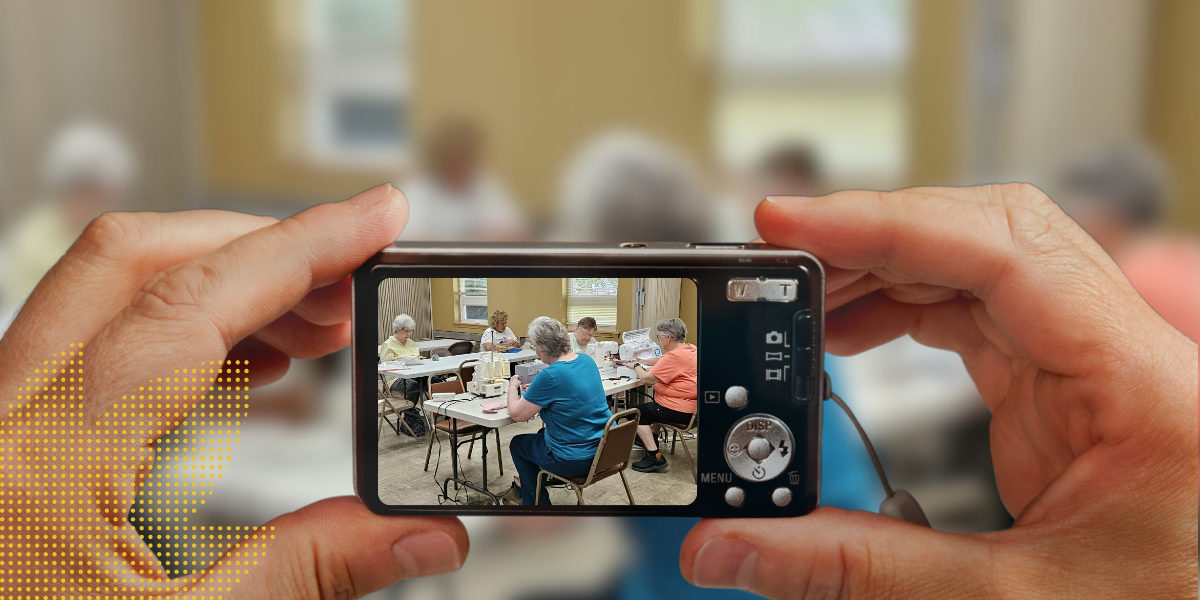
At New Carlisle United Methodist Church, sewing has become more than a hobby—it has become a way to build community, serve neighbors, and share God’s love. Through Tangled Threads, people of different ages and backgrounds gather around a shared love of creating, discovering connection and purpose one stitch at a time. Here’s a quick look at what it is, how it works, and why it matters. What It Is Tangled Threads is a sewing-centered Fresh Expression that grew out of New Carlisle United Methodist Church. The idea actually began on the ride home from a Fresh Expressions and Messy Church training, when a few laypeople in the backseat started imagining what they could do with something they already loved. The result was a new community built around sewing, serving others, and growing in faith together. How It Works On the second and fourth Wednesdays of each month, around ten people gather from 9 a.m. to 2 p.m. to sew and create items for people in need. Their projects have included wheelchair bags for a nearby retirement community, soap bags for the food pantry, baby layette kits, and other donated items. At noon, the sewing pauses for devotions and a time of sharing, making spiritual conversation a natural part of the community’s rhythm. Participants include people from both inside and outside the congregation—and range from an 86-year-old woman who learned to tie quilts to a 14-year-old who came wanting to learn to crochet. Why It Matters Tangled Threads shows that a Fresh Expression doesn’t have to begin with a complicated program or a large team. Sometimes it begins by noticing what people already love to do—and asking how that passion might become a place for relationship, purpose, service, and faith. More than 180 handmade items had already been donated when the story was published, but perhaps the more important impact is happening around the sewing tables themselves: generations learning from one another, people finding purpose, relationships forming, and faith being woven naturally into life together. This snapshot was developed through thoughtful research using publicly available sources, including websites, news articles, community updates and a brief conversation with the pioneer.