





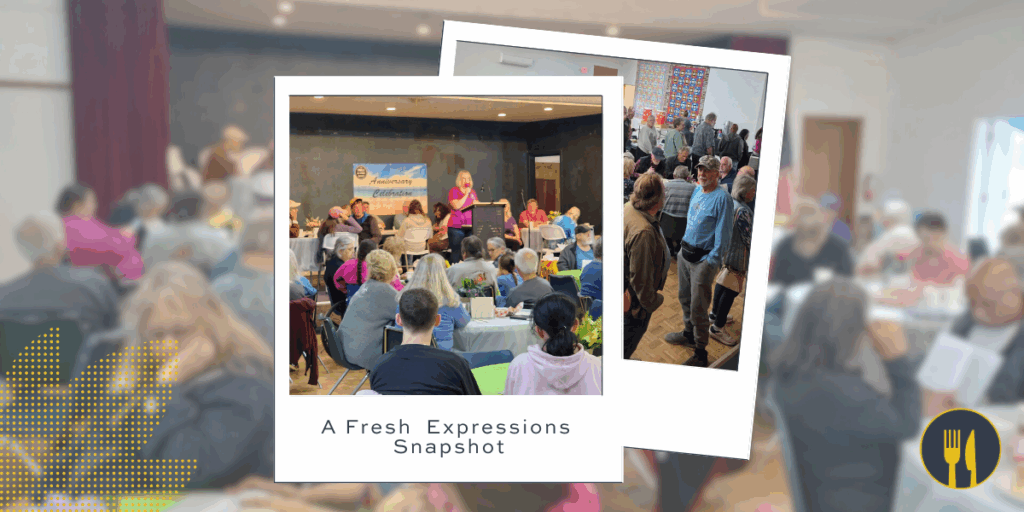
The Table @ Ocean Shores story was updated on January 5th, 2026 . In a coastal town where storms roll in quickly and many neighbors carry quiet stories of loss, isolation, or mistrust of church, a table has become holy ground. The Table @ Ocean Shores gathers each week in Ocean Shores —not for a traditional worship service, but for a shared meal. What began as a simple act of hospitality has grown into a Dinner Church community where dignity is restored, relationships are formed, and faith is given room to breathe. As Sandy Johnson describes the heart behind the gathering, the vision is clear and deeply rooted in prayer.
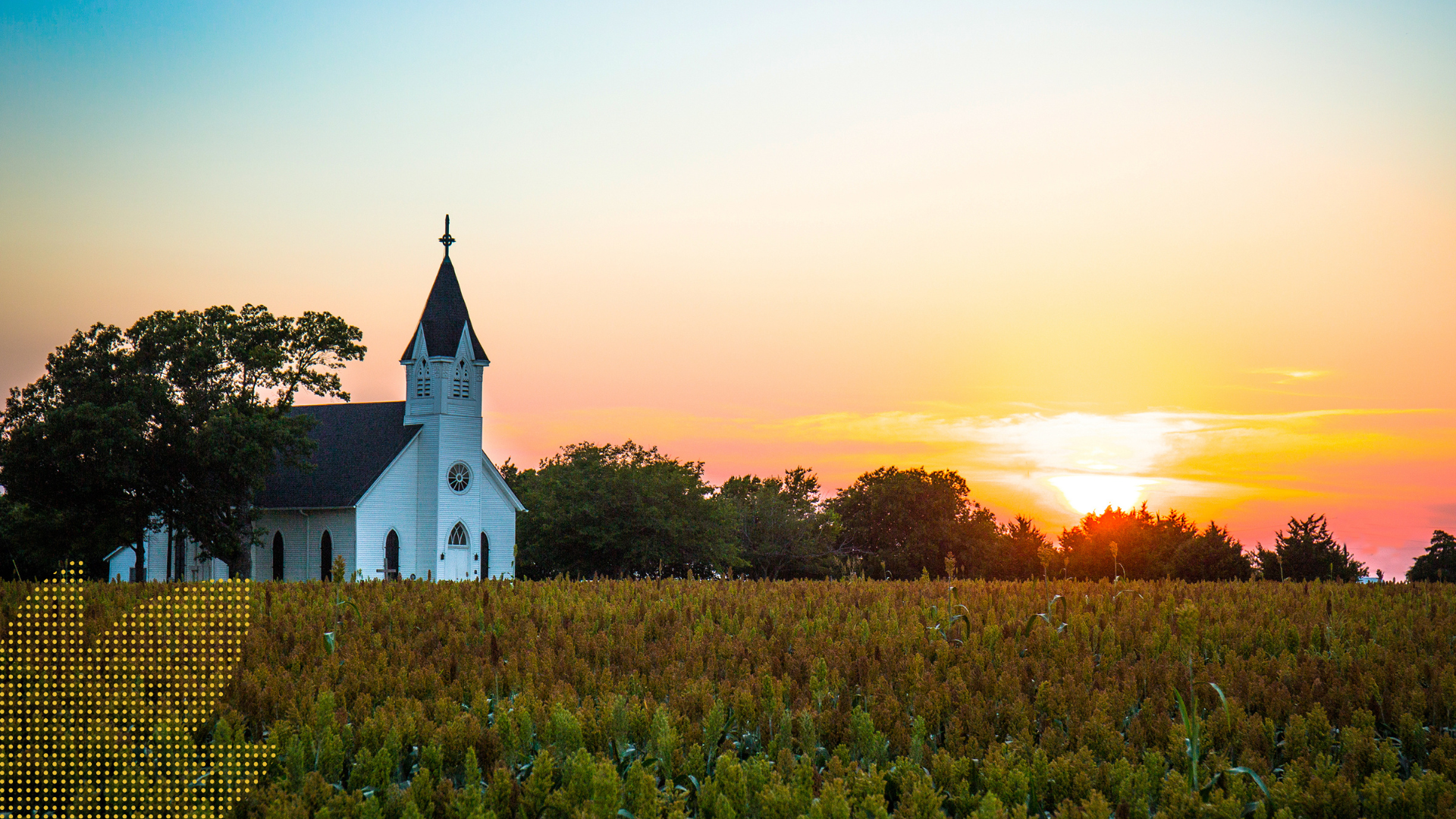
I’m the granddaughter of a grower, a horticulturist, and a pioneer who supplied the Eastern United States with delicious fruit and beautiful plants for decades. Growing up, I learned early that fertile fields don’t just happen—you prepare them. You walk the boundaries, test the soil, remove the rocks, and pray for rain. You learn to trust that the seeds you plant will bear fruit in time. That rhythm—preparing, sowing, tending, and trusting—has shaped how I see the church and the mission of God. Jesus tells a story in Matthew 13 about a sower who scatters seed with generous abandon. Some falls on rocky ground, some among thorns, and some on good soil that produces an abundant harvest. The sower’s work is not to force the growth, but to prepare the soil and make room for the Spirit’s increase. I think that’s what we’re doing in the Fresh Expressions movement—cultivating the kind of soil where the gospel can take root in the hearts of people who might never find their way into a sanctuary. When the Fields Called Wesley In the spring of 1739, John Wesley faced his own “field moment.” His friend George Whitefield invited him to preach outside the walls of the church—literally, in the open air—to miners and laborers who would never set foot in an Anglican parish. Wesley was hesitant. He had been formed as an Anglican priest, faithful to the order and rhythm of the church. But when he saw the crowds who were spiritually hungry yet far from the pews, he wrote in his Journal: “At four in the afternoon I submitted to be more vile, and proclaimed in the highways the glad tidings of salvation.” — John Wesley’s Journal, April 2, 1739 Today, fewer than 1 in 3 Americans attend church services regularly, with only about 20% attending weekly and over half (57%) rarely or never participating in traditional religious gatherings. Meanwhile, nearly 30% of Americans now identify as religiously unaffiliated—a number that continues to rise each year. https://news.gallup.com/poll/642548/church-attendance-declined-religious-groups.aspx Yet, research consistently shows strong spiritual curiosity. For example, a recent study found that 66% of U.S. adults—even across generations—say they have made a personal commitment to Jesus that is still important today, and nearly a third of all Americans consider themselves “spiritually curious” despite not attending church. https://georgebarna.com/2025/02/most-americans-believe-in-a-supreme-power/ These trends echo the challenge that John Wesley faced—many people are unlikely to come inside church walls, but they remain deeply open to spiritual conversations and new expressions of Christian community outside traditional settings. That moment changed everything. Wesley didn’t abandon the Church of England; he sought to renew it from within by reaching those it had overlooked. His heart was not to create a rival church, but to extend the reach of grace—in his words to, “spread scriptural holiness throughout the land.” He knew the gospel could not be contained within the walls of even the most faithful parish. That is the beauty of the Methodist movement and perhaps what I most highly regard in Wesley’s theology. This important contribution to contemporary to Christian theogy is a both/and ness or as Wesley scholar Paul Chilcote refers to it “conjunctive theology” rather than either/or theology, that fleshes itself out in practical ways across our bridgebuilding tradition. Preparing the Soil Then and Now Wesley’s decision to take to the fields was not rebellion—it was reclamation. Both/And. He understood, as Jesus taught in Matthew 13, that the Word of God often meets resistance, but when the soil is ready, it multiplies thirty, sixty, even a hundredfold. The condition of the soil, in fact, did not prevent the Sower from scattering it generously if even perhaps, haphazardly. Wesley began organizing those who responded into small groups, or “societies, class meetings, and bands” where people could confess their sins, hear the stories and learn the ways of Jesus, and care for one another. Those early Methodists became gardeners of grace—cultivating holiness through community, discipline, and mission. That same pattern continues today in Fresh Expressions of church. We’re not creating something entirely new; we’re tending the fields Wesley and the circuit riders once rode through, believing again that God’s grace precedes us, is already at work, and wants to reach every person, in every place. We need only tend the soil of our communities. Whether it’s a dinner church, a running group, a recovery circle, or a coffee shop community, these expressions of church echo Wesley’s field preaching: going to where people are, not waiting for them to come to us. Sent in Pairs: Luke 10 and the Circuit Riders When Jesus sent out the seventy-two in Luke 10, He gave them clear instructions: “Go! I am sending you out like lambs among wolves… Do not take a purse or bag or sandals; and do not greet anyone on the road.” (Luke 10:3–4) He told them to rely on the hospitality of others, to speak peace, and to heal. The mission was mobile, relational, and dependent on the Spirit. Those instructions could easily describe the circuit riders of early Methodism. They traveled light, trusted God to provide, and sought out people who hadn’t heard the good news. They were sent to proclaim grace, form communities of faith, and nurture discipleship in barns, taverns, and on front porches. Quite frankly, this depended on the everyday Christian and the ministry of the laity. The only way the Methodist movement was able to move across the American landscape was due to the empowerment of the laity. Today is no different. The people called Methodist speak to this value in our connectional system. These fresh expressions of church are one more way we can empower and deploy our laity while recapturing our Wesleyan roots like the circuit riders who paved the way for us today. Where might God be calling you to cultivate the soil in your own community? Who are the people on the edges—the ones who aren’t coming to church but whom Jesus longs to reach? How might you go, as Wesley did, to where the people already are? The circuit riders’ lives were marked by both grit and grace. They rode hundreds of miles through harsh weather, often sleeping outdoors (and sometimes even on horseback), driven by a conviction that no soul should be out of reach of grace. Their legacy reminds us that innovation in mission is never about novelty for its own sake—it’s about love that refuses to be limited by buildings or boundaries. Today’s Fresh Expressions pioneers share that same resilient spirit, seeking out the people and places where grace permeates the soil and seeds beg to break through. Cultivating Fields of Renewal Wesley often said, “The world is my parish.” It was both a statement of boldness and humility. He didn’t mean he owned the world; he meant the world was entrusted to him as a field of mission. Every village, every person, every pub, every workplace—each was soil in which the Spirit was at work. Today, our fields might look different—online spaces, neighborhood parks, assisted living facilities, tattoo parlors, or CrossFit gyms—but the call remains the same: to cultivate soil where grace can grow. When we experiment with new forms of church, we’re not forsaking the old fields; we’re expanding the boundaries of the parish. A Call to Go and Grow As the granddaughter of a grower, I know that preparing soil is slow, patient work. You can’t rush a harvest. You have to tend to what’s beneath the surface, trusting that God is already at work long before the first green shoots appear. As a Methodist, I recognize the same pattern in Wesley’s movement. His ministry took root because he went to the people and nurtured what God was already growing. Fresh Expressions today are simply another season in that same story—another generation of Methodists called to go, to till, to tend, and to trust. “I look upon all the world as my parish; thus far I mean, that, in whatever part of it I am, I judge it meet, right, and my bounden duty to declare unto all that are willing to hear, the glad tidings of salvation.” — John Wesley, Journal, June 11, 1739 As Jesus said to His followers in Luke 10, “The harvest is plentiful, but the workers are few.” (Luke 10:2) The same is true today. The harvest fields around us are ripe—with people longing for belonging, meaning, and hope. The invitation is simple: Go. Prepare the soil. Trust that God is already scattering seed generously. For the “both/and” Wesleys, John and his brother Charles, there was no holiness apart from social holiness. Put another way, there was no holiness of heart apart from life. The linchpin, “The only thing that counts is faith working itself out through love.”-- Galatians 5:6 For the Wesley’s, holiness of heart and life is the goal toward which every Christian life should move. Ask God to show you one “field” near you where the soil might be ready. It could be a local café, a dog park, a recovery meeting, or a place you already spend time. Pray for the people there. Listen for their stories. Ask God how you might join God to bring peace and presence, not programs and plans. Because the same Spirit that sent Wesley to the fields is still sending us— into the world that is, even now, God’s parish.

What if faithfulness in rural ministry isn’t about moving faster—but about listening longer? In this episode of the Rural Renewal Podcast, we hear from PJ and Melanie, two co-pastors planting a church in southwestern Virginia who have learned to let prayer, patience, and presence set the pace. They share honestly about discerning God’s leading, choosing slowness in a culture that rewards speed, and remaining open to change—even when it’s uncomfortable or costly. Their story is a reminder that deep roots are formed through intentional prayer, trust in God’s timing, and the courage to adapt for the sake of the people God has placed before us. Patrick “PJ” Johnson serves as a network administrator for Scott County Public Schools, Lead Pastor of Uplift Church in Weber City, Virginia, and an adjunct faculty member at the Appalachian School of Theology. He and his wife, Amanda, planted Uplift Church in their home in 2012. Patrick and Amanda have been married for 24 years and have four daughters. Melanie McMurray is married to her husband, Matt, and is raising three children, Elijah, Elan, and Salem. She serves as an administrator in Scott County Public Schools and as the children’s ministry director at Uplift Church. Melanie is also stepping into a new role as vice president of the Appalachian School of Theology. Related Resources: Join our Facebook group: Rural Renewal Podcast Community Email us: podcasts@freshexpressions.com Subscribe & Review Help us get the word out by subscribing and leaving a review for Rural Renewal Podcast on your favorite platform. Apple Podcasts Spotify Google Podcasts